Latest Ebola Outbreak Shows We Need US Global Health Funding
Written by Janel Forsythe | Published: May 28, 2026
It’s been almost one year since the US Agency for International Development (USAID) was shuttered by the Trump-Vance administration.
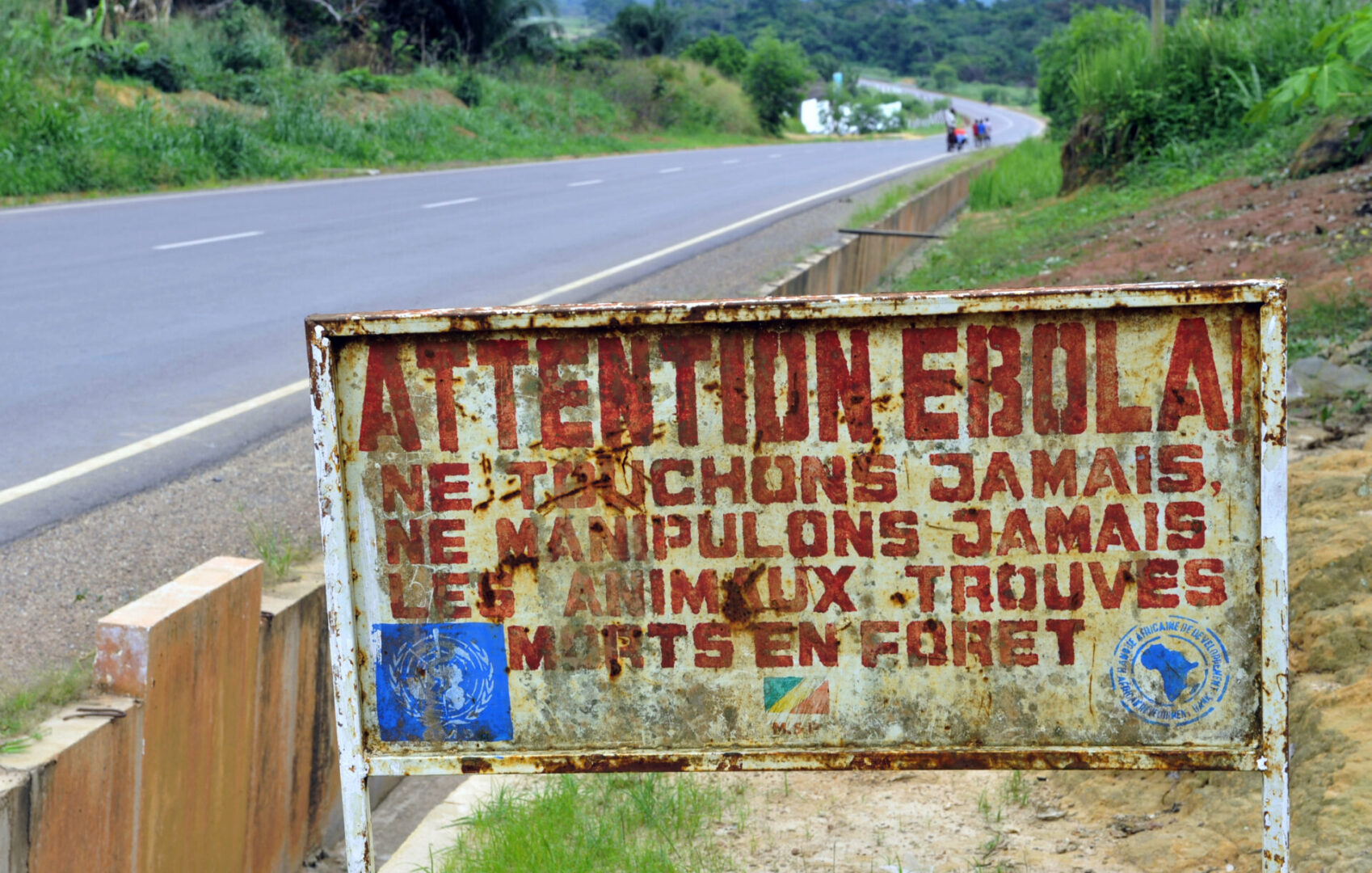
Elon Musk, the wealthiest person alive and a megadonor to Trump’s presidential campaign, led the misguided, cruel, and unconstitutional effort to close the agency. Musk eventually left DC and his hostile DOGE operation came to an end, but its dire consequences persist, as evidenced by the current outbreak of Ebola virus that is spreading in the Democratic Republic of the Congo (DRC) and Uganda.
Timeline of USAID’s Dissolution
As soon as Donald Trump assumed office for the second time on January 20, 2025, he signed an executive action that paused all US foreign assistance programs for a 90-day review. Within a week, senior-level staff at the agency were placed on administrative leave while thousands of USAID staff worldwide were dismissed from their roles.
The Trump-Vance administration shut down the USAID website on February 2 and closed the DC headquarters building the next day. The next day, Secretary of State Marco Rubio was appointed by the administration to Acting USAID Administrator. He later announced via X (formerly Twitter) that over 5,000 contracts, or 83 percent of USAID programs, had been terminated. At the end of the month, all remaining USAID staff received notice of a reduction-in-force and lost their jobs.
While the administration made announcements in the spring of 2025 about its plans to incorporate aspects of USAID that aligned with its political agenda into the State Department, funding for global health programs and related operational expenses was severely reduced.
By early June, the Trump-Vance administration urged Congress to rescind over $9 billion in funding — including over $1 billion for reproductive health, family planning, HIV/AIDS testing and treatment, and LGBTQ+ programs, and for support of multilateral organizations including the World Health Organization.
On July 1, 2025, USAID was officially shut down after 64 years in operation.
Absence of US Leadership for Disease Response
During previous outbreaks of Ebola and other diseases, USAID worked with countries to track the number of cases in labs, supported contact tracing efforts, ramped up distribution of personal protective equipment (PPE) to hospitals, and disseminated community health workers to screen people for symptoms and inform others about possible exposure.
In 2024, the United States provided treatment to 11 million people living in DRC to prevent the spread of deadly diseases such as tuberculosis and malaria. It also played an integral role in containing six previous outbreaks of Ebola in the region since 2018.
Just one year later, DOGE reduced USAID to a shell of itself, essentially collapsing its support to countries around the world. Community health workers who partnered with the agency to inform neighbors about the spread of diseases lost their roles and had to find other jobs. The Trump-Vance administration directed a US National Institutes of Health facility responsible for studying Ebola to stop its research.
Watching the Impacts in Real Time: The Current Ebola Outbreak
Earlier this month, the World Health Organization declared the current outbreak of Ebola in Uganda and DRC a “public health emergency of international concern.” During two previous outbreaks of the Bundibugyo strain of the virus, the WHO reports that the death toll ranged from 30 percent to 50 percent. There is currently no vaccine available for the Bundibugyo strain currently wreaking havoc.
While the CDC has some personnel on the ground to coordinate response along with international organizations like WHO, neither has the capacity or resources that USAID previously had to respond to this epidemic. And, of course, the Trump-Vance administration has slashed the CDC budget and withdrawn funding from WHO, too.
Experts insist that the spread of this highly contagious and deadly disease could have been halted if the US had kept funding in place for global health emergencies.
But this administration has made it clear that it has other priorities.
The Trump-Vance administration plans to spend $2 billion of congressionally appropriated funds meant for global health to cover the costs associated with its destruction of USAID. Congress also recently announced that another $19.2 billion in foreign assistance grants will be canceled, but where these funds will eventually end up still remains unclear.
The closure of USAID has been nothing short of devastating. It has put the health and wellbeing of millions of people worldwide in jeopardy. Foreign non-governmental organizations that previously depended on the United States as a partner have seen technical support disappear, funds evaporate, and supply chains go dry.
But we do not have to accept this dire situation as final.
What We Can Do
Congress must demand that the Trump-Vance administration restore US global health funding, respond to the current Ebola outbreak, and help prevent future ones that are sure to come.
Legislators have a duty to ensure that appropriated funds are used to save lives and make our world healthier and safer for everyone, no matter who we are or where we live.
Please email your elected officials to make restoring global health funding a top priority now!